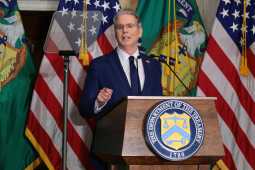
U.S. Treasury Secretary Scott Bessent announces a new set of sanctions against Iran, describing them as “an economic D-Day,” in the Cash Room at the Treasury Department on August 24, 2026 in Washington, DC. Bessent threatened Iran in an opinion piece in the Financial Times on Sunday with “the single greatest financial offensive ever”, almost six months after the United States and Israel launched a war against Iran in February. (Photo by Chip Somodevilla/Getty Images)
Under the bill, FERC would consider cyber threats from quantum computers and post-quantum cryptography in its reliability standards for the energy sector.
A data center in Vernon, Calif. They are groups calling for AI, and the technology it sits on, to be designated as critical infrastructure. (Getty Images)
The designation would unlock a range of federal services, tools and resources for an industry that policymakers view as increasingly tied to national and economic security.
The FBI and Environmental Protection Agency issued a joint advisory last week confirming attacks at water and wastewater utilities in at least 12 states since July 27. (Getty Images)
Digital legal compliance and government regulation concept with security icons, creative graphic style, on blurred US flag background. 3D Rendering. ismagilov, istock/Getty Images Plus
The government spent the past two decades learning what private sector partners have always known: cyber resilience requires everyone in the room. ANCHOR-CI is proof that the…
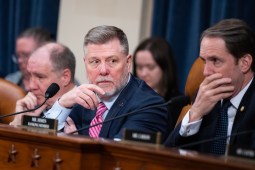
Chairman Rick Crawford, R-Ark., center, and ranking member Rep. Jim Himes, D-Conn., right, conduct the House Select Intelligence Committee hearing titled “Worldwide Threats Assessment,” in Longworth building on March 26, 2025. (Tom Williams/CQ Roll Call)
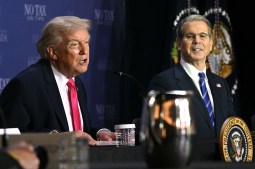
US President Donald Trump (L) speaks, flanked by US Secretary of Treasury Scott Bessent, during a roundtable discussion on his “no tax on tips” policy at the AC Hotel Las Vegas Symphony Park in Las Vegas, Nevada, on April 16, 2026. (Photo by Jim WATSON / AFP via Getty Images)
The government's new AI clearinghouse risks becoming a committee that discovers more problems than it solves — unless it's designed around patching, not just scanning.